-
Pawar HospitalPawar Hospital (+91) 9175898623
-
Spire HospitalSpire Hospital (+91) 9175983868
-
Book AppointmentBook Appointment
Dr. Gaurav Pawar is a well established Hip and Knee joint replacement and sports injury (Arthroscopy) surgeon. He has eight years of experience in Trauma & Orthropaedics and has gained considerable knowledge and espertise in this field during this period. He has also worked in Trauma and Orthopaedics in the NHS system in UK for 3 years at reputed hospitals like Royal Free Hospital,London, Chase Farm Hospital, London and Tameside Hospital, Greater Manchester. He has performed numerous joint replacement and arthroscopy surgeries during this period and is well versed with the latest surgical techniques. He has also presented and published many papers at national and international stages.
Hip Arthroscopy
Hip Arthroscopy
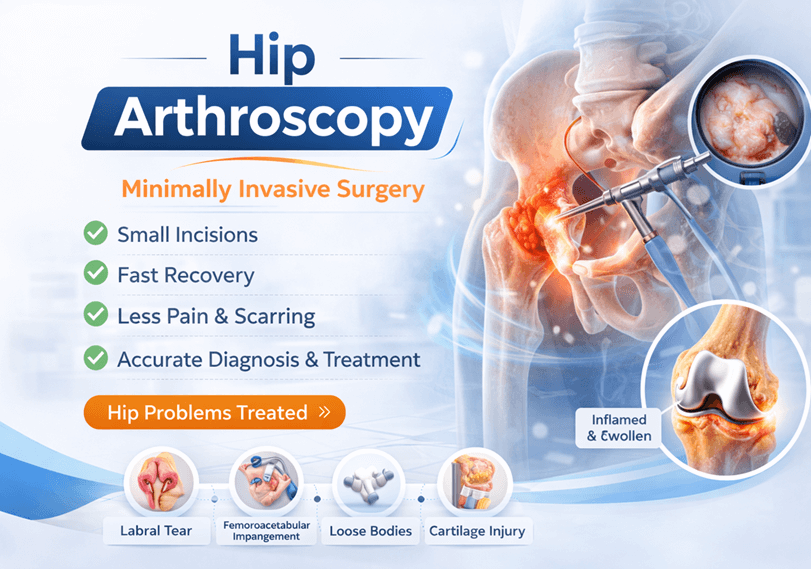
Common conditions treated with Hip Arthroscopy include:
- Labral tears (damage to the cartilage rim of the hip socket)
- Femoroacetabular Impingement (FAI)
- Cartilage damage
- Loose bodies (small fragments of bone or cartilage)
- Hip synovitis (inflammation of joint lining)
- Early-stage hip arthritis
- Sports-related hip injuries
Since the hip joint has limited blood supply in certain areas, some injuries like labral tears do not heal on their own. In such cases, surgical intervention through hip arthroscopy helps restore function and relieve pain.
The Hip Arthroscopy procedure involves the following steps:
Anesthesia: The procedure is usually performed under general or spinal anesthesia.
Arthroscopic Access: Small incisions (keyhole cuts) are made around the hip. A tiny camera called an arthroscope is inserted to visualize the inside of the joint on a monitor.
Joint Inspection: The surgeon carefully examines the cartilage, labrum, ligaments, and surrounding structures to identify the exact problem.
Correction of the Problem: Depending on the condition, the surgeon may:
- Repair or trim a torn labrum
- Remove loose bone or cartilage fragments
- Reshape bone in cases of impingement (FAI)
- Clean inflamed tissue
Closure: After the procedure, the instruments are removed and the small incisions are closed with stitches or sterile strips.
Because it is minimally invasive, hip arthroscopy generally results in:
- Smaller scars
- Less blood loss
- Reduced post-operative pain
- Faster recovery compared to open surgery
After surgery, patients undergo a structured rehabilitation program to restore hip strength, flexibility, and mobility. Most patients return to daily activities within a few weeks, while athletes may return to sports in 3 to 6 months depending on recovery progress and medical advice.
Do’s for Hip Arthroscopy
- Follow Pre-operative Instructions: Carefully follow your surgeon’s advice before surgery, including fasting instructions and medication adjustments.
- Prepare Your Home: Arrange your home to make movement easier after surgery. Keep essentials within reach and remove obstacles to prevent falls.
- Use Crutches as Advised: Most patients need crutches for a few weeks to reduce weight-bearing on the operated hip.
- Attend Physical Therapy: Start physiotherapy as recommended. It plays a crucial role in restoring hip strength, flexibility, and joint stability.
- Take Prescribed Medications: Use pain relievers, anti-inflammatory medicines, and antibiotics as directed.
- Control Swelling: Apply ice packs for 15–20 minutes at a time and keep the leg slightly elevated when resting.
- Keep the Incision Clean and Dry: Follow wound care instructions to avoid infection.
- Maintain a Healthy Diet: Eat protein-rich and nutritious food to promote faster healing.
Don’ts for Hip Arthroscopy
- Overexert Yourself: Avoid putting too much stress on the hip in the early recovery phase.
- Ignore Physical Therapy: Skipping rehabilitation can delay healing and reduce long-term outcomes.
- Put Full Weight Too Soon: Do not walk without support unless your surgeon allows it.
- Engage in High-Impact Activities: Avoid running, jumping, squatting, or heavy workouts until cleared by your doctor.
- Sit for Prolonged Periods: Avoid sitting for long hours, as this may increase stiffness and discomfort.
- Cross Your Legs: This can strain the healing tissues inside the hip.
- Ignore Warning Signs: Contact your surgeon immediately if you notice fever, increasing pain, redness, swelling, or discharge from the wound.
Sports Injury
Physiotherapy & Rehabilitation